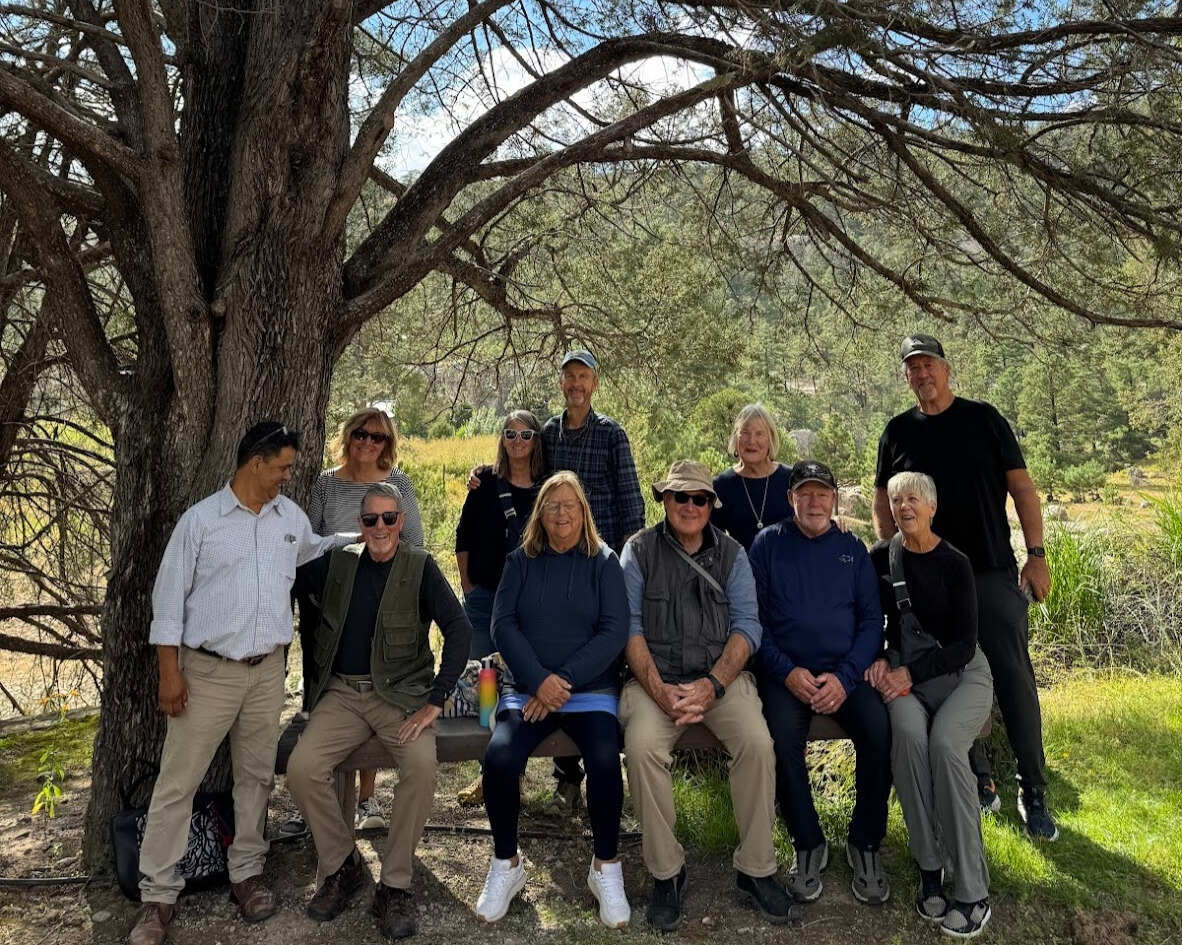
Traveling to Remember Who We Are: A Journey to the North That Transformed the Heart
They say journeys are mirrors: revealing what we already knew but hadn’t named, awakening the quiet corners of the soul, and showing us—without filters—what we are capable of feeling.
And this journey to the North of Mexico was exactly that: a reminder of humanity, community, and the beauty that unfolds when we travel slowly and with presence.
This trip began, like many of my paths, thanks to a group I’ve been accompanying for several years. Five American couples who return to Mexico again and again, not to collect destinations, but to connect with the essence of the country. Over time, they became my favorite travelers, then my friends, and today I carry them as family.
They travel to be inspired, to feel the deep pulse of the land, to reconnect with the hospitality, strength, and joy of the Mexican people.
And I travel with them to remember how to live with attention, openness, and gratitude.
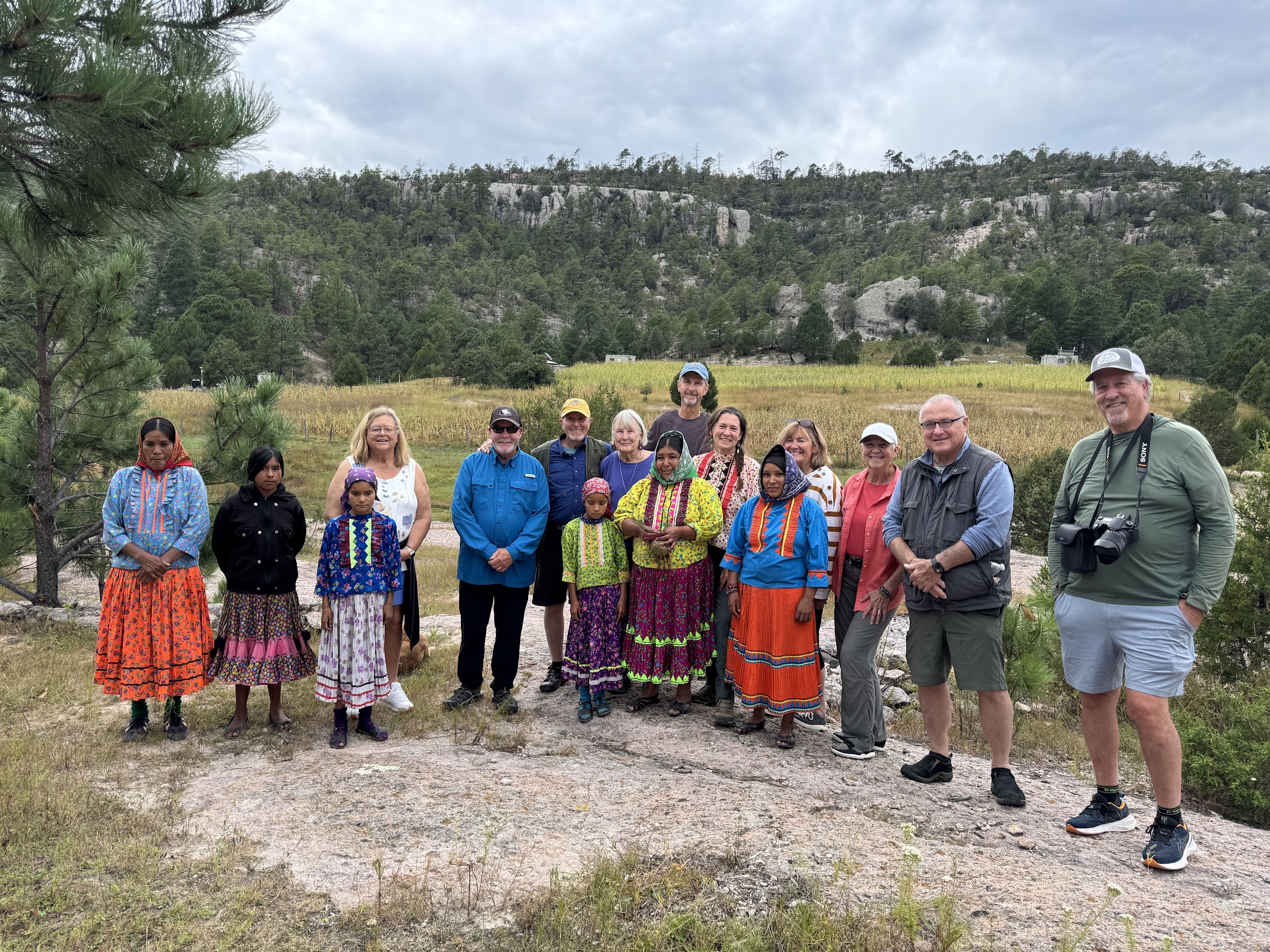
This time, we chose a destination that demands humility: the Copper Canyon, a vast universe of mountains that are not merely visited, but entered with respect. A region where the Sierra Madre Occidental becomes a labyrinth of green abysses, scattered Rarámuri homes, centuries-old Jesuit missions, and winding roads that reveal the resilience of its people.
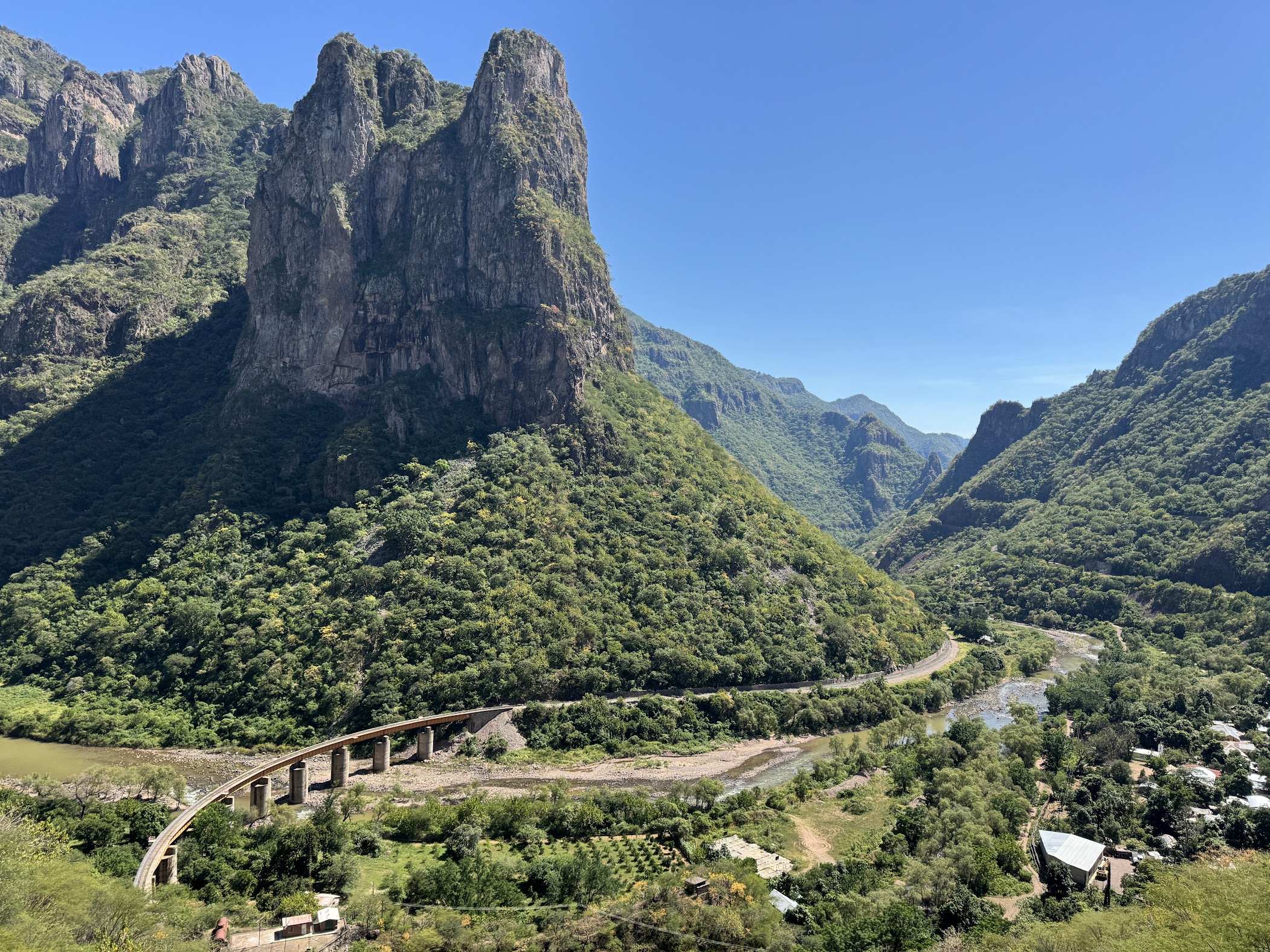
The journey began in El Fuerte, northern Sinaloa—a colonial town founded in the 16th century, filled with restored mansions, spacious streets, and a quiet air that blends Indigenous heritage with Spanish history. There, by the river and under the town’s unhurried rhythm, we prepared to board the legendary Chepe Express, perhaps the most stunning train ride in the continent.
When the train departed, the Sierra unfolded like living cinema: vast canyons, tunnels carved through stone, bridges suspended over emptiness, and mountains that shift vegetation as if turning the pages of a book. Hours later, the Copper Canyon—six times larger than the Grand Canyon—revealed itself in a vast palette of copper, green, and red earth.
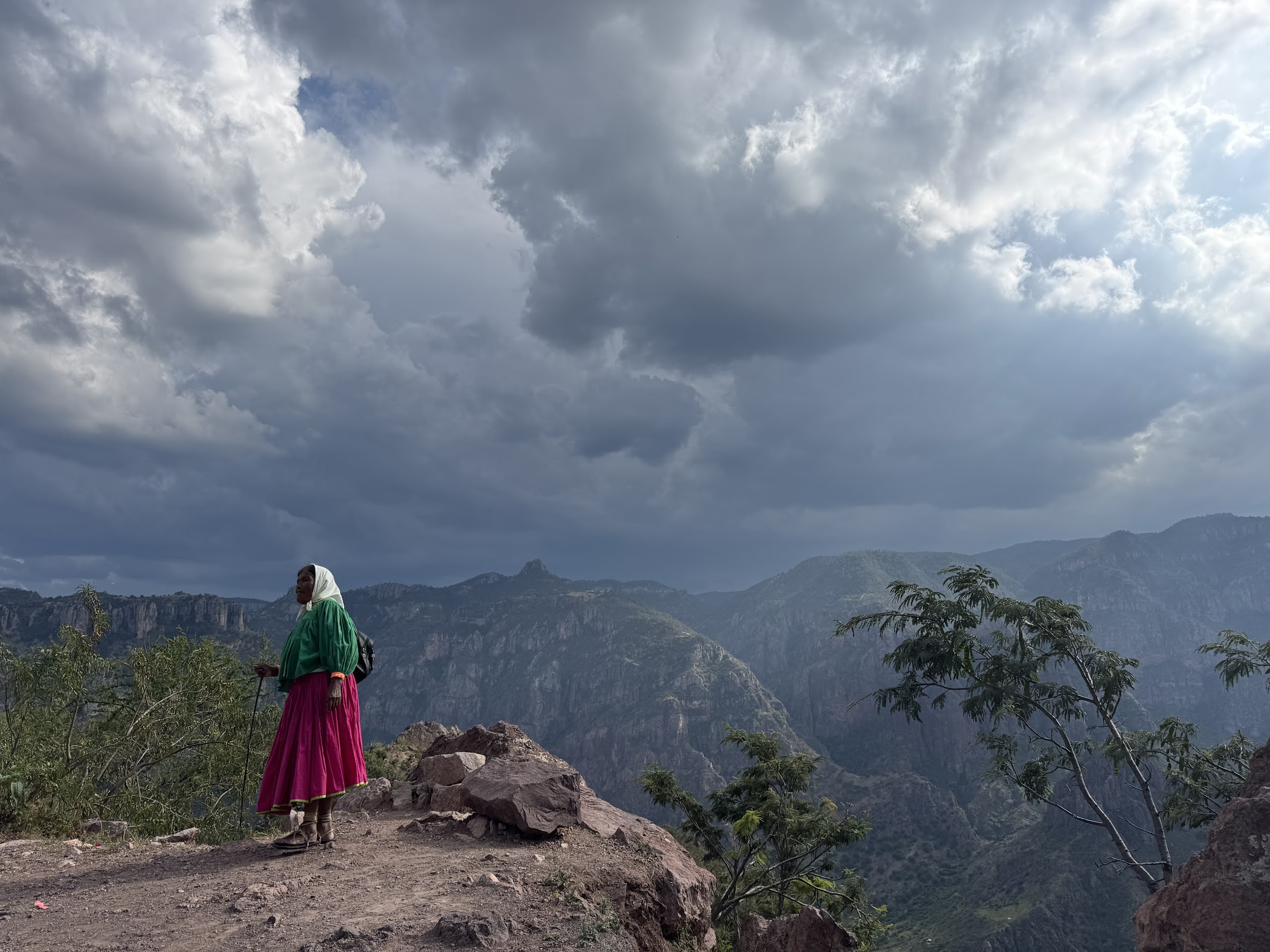
At Divisadero, Rarámuri women welcomed us with handmade crafts: woven fibers, colors that narrate stories, gazes full of dignity and resilience. A cold wind rising from the canyon announced that we had entered a land where the mountain sets the rhythm.
Upon arriving at the Hotel Mirador, literally perched on the edge of a cliff, the world seemed to pause. From the terraces, we watched a sunset that transformed the sierra into a temple of light—bronze, purple, deep red. It was impossible not to feel both small and infinite.
In the following days, we explored the area on foot and by aerial tram.
We met Rarámuri families living in cave dwellings and small mountain settlements. We shared food, listened to stories whispered by the wind, and learned from a way of life guided by the land itself.
The silence of the canyon is never empty—it teaches.
The descent toward Batopilas, one of Mexico’s oldest and most remote mining towns, took us down nearly 2,000 meters along a narrow, winding road. It was an intense stretch—not only for the vertical drop. Midway down, the brake pads of the vehicle failed, and fear pierced us all in an instant.
But as often happens in Mexico, the answer arrived through community. Martín, a friend from the town, drove up joyfully to help us. By the time we reached Batopilas, the fear had faded, replaced by gratitude.
We walked its Porfirian-era streets, listened to stories of miners and migrations, and ended the night with a dinner shared with Martín—who then surprised us with serenades under the stars.
Those unplanned moments are the ones that make travel real.
In the surrounding region, we visited the Satevó Mission, a beautiful 18th-century Jesuit church standing alone in the landscape, radiating quiet strength. Later, we ate freshly prepared fish by the riverside, the sound of water weaving itself into our conversations.
The journey continued toward Creel, where the scenery shifts again: pine forests, cool lakes, soft mountain silhouettes.
There, we visited the mission of Cusarare and a small museum created by a visionary Belgian priest who spent years protecting and preserving Rarámuri sacred art. It was an encounter with beauty and with the fragility of cultural heritage.
One of the most meaningful moments took place at a Rarámuri boarding school, where children live during the week to continue their studies. We played, brought supplies and fruit, and received in return smiles so deep and honest they disarm any adult posture.
No tourist attraction could have touched us the way that morning did.
The final stretch led us to Chihuahua City, whose elegant historic center contrasts with the austere strength of the desert landscapes around it. It was there that life reminded us of its fragility: one of the travelers suffered a stroke.
Fear tightened our chests; humanity held us together.
He was treated immediately and recovered well. I stayed longer to support them—because sometimes that is what the journey asks of us.
When we finally said goodbye, I understood that this experience had marked us in ways no landscape ever could.
The North taught us that traveling is not movement—it is opening.
That bonds deepen when vulnerability enters the room.
That nature speaks when we slow down.
That the living cultures of the land are treasures worthy of care.
And that tourism, when practiced with presence, can be an act of regeneration.
Traveling with this group reminds me, year after year, why I do what I do:
because journeys can heal, inspire, connect;
because they can return us to the heart;
because they can reconcile us with life.
They come to Mexico to refill their souls.
And every year—without knowing it—they help refill mine.